Spin the Arrow Online
Tap the arrow and it spins for three seconds, then stops pointing somewhere random.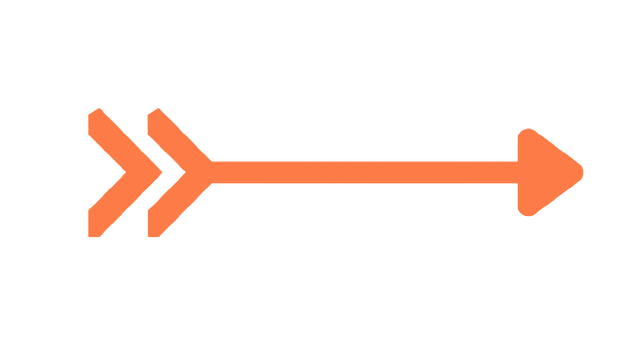
More Fun, Party & Decision Generators
Tap the arrow, or the button under it, and it spins for about three seconds and stops pointing in a random direction. That is the whole tool. Spin the Arrow Online is a flat arrow spinner for a phone or laptop laid in the middle of a group: put people, snacks, cards or chores around the screen and let the arrow choose.
How the spinner works
Each spin adds a random amount between 3,000 and 3,500 degrees to the arrow's current angle, which is roughly eight to ten full turns. The rotation is animated with a three-second ease-out, so the arrow starts fast and slows down before it settles. Spins are cumulative: the arrow starts its next spin from wherever it stopped, so you can spin as many times as you like without resetting anything. There are no segments, labels or sound, and nothing is saved between visits.
Because the arrow is an image rotating on the page, it works on anything with a browser. On a phone, lay it flat on the table; on a laptop, turn the screen toward the group or share it over a video call and have people claim a clock position.
Setting up a fair circle
An arrow spinner is only as fair as the layout around it. A few habits that avoid arguments:
- Space people evenly. With four players, sit at 12, 3, 6 and 9 o'clock. With eight, add the half-hours. Uneven gaps give some people a bigger target.
- Decide what counts before spinning. The arrowhead, not the tail, is the pointer. Agree on it out loud once.
- Have a rule for the gap. If the tip lands between two people, either spin again or say "closest to the tip wins" in advance.
- Keep the phone still. Once it has been set down, nobody touches the table until the arrow stops.
Ways people use it
- Who goes first. Board games, card games and console tournaments. Spin once, the person the tip points at starts, play proceeds clockwise.
- Spin the bottle without a bottle. The classic party circle, using a phone instead of an empty bottle that rolls off the table.
- Truth or dare turns. The arrow picks who answers; a separate Random Pair Generator is handy when the dare needs two people.
- Classroom cold-calling. Put the laptop in the middle of a table group and let the arrow pick who presents. It feels less personal than the teacher choosing.
- Which way to walk. Standing at a junction on a wander with no plan, spin and go where it points. If you want a compass heading instead of a pointer, the Random Direction Generator gives you north, south, east or west as text.
When a spinner is the wrong tool
The arrow points at physical space, so it is best for small groups sitting in a circle, roughly eight people at most. For anything else there is a better fit on the site. If you have a list of names, the Random Name Picker draws one without anyone needing to sit anywhere. To split a class or a party into sides, use the Random Team Generator. For a prize draw with tickets, the Random Raffle Generator is built for it. All of these live under all fun, party and decision tools.
Frequently asked questions
- Is the spin actually random?
Yes. Each spin adds a random number of degrees between 3,000 and 3,500 to the arrow's current angle, chosen by the browser's random number generator. Neither the page nor the person tapping can steer where it stops.
- Can I add names or segments to the arrow spinner?
No. This page is a bare arrow with no wheel around it; you provide the targets by arranging people or objects around the screen. If you want to pick from a typed list, use the Random Name Picker instead.
- Does it work on a phone?
Yes. Tap the arrow or the Spin The Arrow button. Laying the phone flat in the middle of the group works best, and it is fine to lock the screen orientation first so the page does not rotate when someone bumps the table.
- What if the arrow stops between two people?
Agree on a rule before you start. The two common ones are spin again, or the person closest to the tip of the arrowhead wins.
- How long does a spin take?
About three seconds. The arrow turns eight to ten times, slowing down toward the end so you can see where it lands.